TL;DR: In Plum, PA, water damage restoration typically costs $1,300 to $3,000 for a single clean-water room and $5,000 to $25,000 or more for a flooded basement or multi-room loss with contaminated water. The price depends on the water’s contamination level (Category 1, 2, or 3), how many square feet are affected, how many days the structure needs to dry, and whether materials like drywall, insulation, or flooring have to be removed and replaced.
If you’re standing in a wet basement in Plum right now, holding two estimates that are thousands of dollars apart, you’re not imagining things. One contractor may be quoting extraction and drying only. The other may be pricing in demolition, antimicrobial treatment, and a longer dry time because your split-level’s finished basement has more wall cavity and insulation to dry than a slab-on-grade room. Here’s how the numbers actually break down.
How Much Does Water Damage Restoration Cost in Plum, PA?
Most Plum homeowners pay somewhere between $1,300 and $25,000, depending almost entirely on how contaminated the water is and how much square footage it touched before anyone caught it. A small, clean-water leak caught the same day sits at the low end. A basement that sat under Category 3 water for 48 hours before anyone noticed sits at the high end.
| Scenario | Typical Cost Range |
|---|---|
| Single room, Category 1 (clean) water, caught same day | $1,300 - $3,000 |
| Multiple rooms, Category 2 water, carpet and pad removed | $3,000 - $7,000 |
| Finished basement, Category 2 or 3 water, drywall and insulation removed | $5,000 - $12,000 |
| Whole-floor loss, Category 3 water, extensive demolition | $10,000 - $25,000+ |
| Add: antimicrobial treatment (required for Category 3) | +$500 - $1,500 |
| Add: each drying day beyond day 3 (equipment rental and monitoring) | +$150 - $400 per day |
These are typical industry ranges, not a quote. A real number depends on a walk-through of the specific loss, and any legitimate restoration company should hand you a written scope before work starts, not a verbal ballpark.
What Drives the Price of Water Damage Restoration?
Four things move the number more than anything else: the water’s category, the square footage affected, how many days it takes to dry, and how much demolition is required. Everything else is a variation on those four.
Water category matters because it determines whether materials can be dried in place or have to come out. Under the ANSI/IICRC S500 standard, Category 1 is clean water from a sanitary source like a supply line. Category 2, or gray water, carries contamination such as washing machine discharge or groundwater seeping through a foundation. Category 3, or black water, includes sewage, any backup from beyond the trap, and rising flood water, and it almost always requires removing porous materials like carpet pad, drywall, and insulation rather than drying them.
Square footage and drying days are the other half of the equation. A single 10-by-12 bedroom with a supply-line leak might dry in two to three days with a couple of air movers and a dehumidifier. A finished basement with wet insulation behind drywall can take four to seven days, and every extra day adds equipment rental and monitoring visits to the invoice.
Older Plum housing stock adds a wrinkle. Many split-level and ranch homes in the area were built in the 1960s and 1970s, with finished basements that have more wall cavity, older insulation, and sometimes paneling over masonry. Water gets behind those materials and stays there longer than it would in an open, unfinished space, which is why a basement loss in an older Plum home often lands at the higher end of the range even when the square footage looks modest.
Will Homeowners Insurance Cover the Cost in Pennsylvania?
Most Pennsylvania homeowners policies cover sudden, accidental water damage from inside the home, like a burst supply line or a water heater that suddenly fails, but they exclude gradual leaks and long-term seepage. The water’s source, not just its presence, is what decides the claim.
A standard policy generally does not cover flood damage (rising groundwater, overflowing creeks, storm surface water), and it does not cover sewer backup or sump pump failure unless you’ve added a water backup endorsement. That distinction trips up a lot of homeowners after the fact. If flood is the concern, that coverage comes from a separate policy through the National Flood Insurance Program, not your standard homeowners policy. For the broader rundown on what a standard policy typically does and doesn’t pay for, see the Insurance Information Institute’s coverage guide and our own plain-English breakdown of homeowners insurance and water damage.
Whatever the cause, documentation protects the claim. Photos of the standing water before extraction, moisture readings during drying, and an itemized scope of work all give the adjuster what they need to approve the claim faster and avoid a lowball settlement.
What Happens During a Water Damage Restoration Job?
A typical job moves through four phases: inspection and water extraction, structural drying, cleaning and sanitizing, and repair. Each phase adds to the invoice, and skipping one to save money usually costs more later in the form of hidden mold or warped flooring.
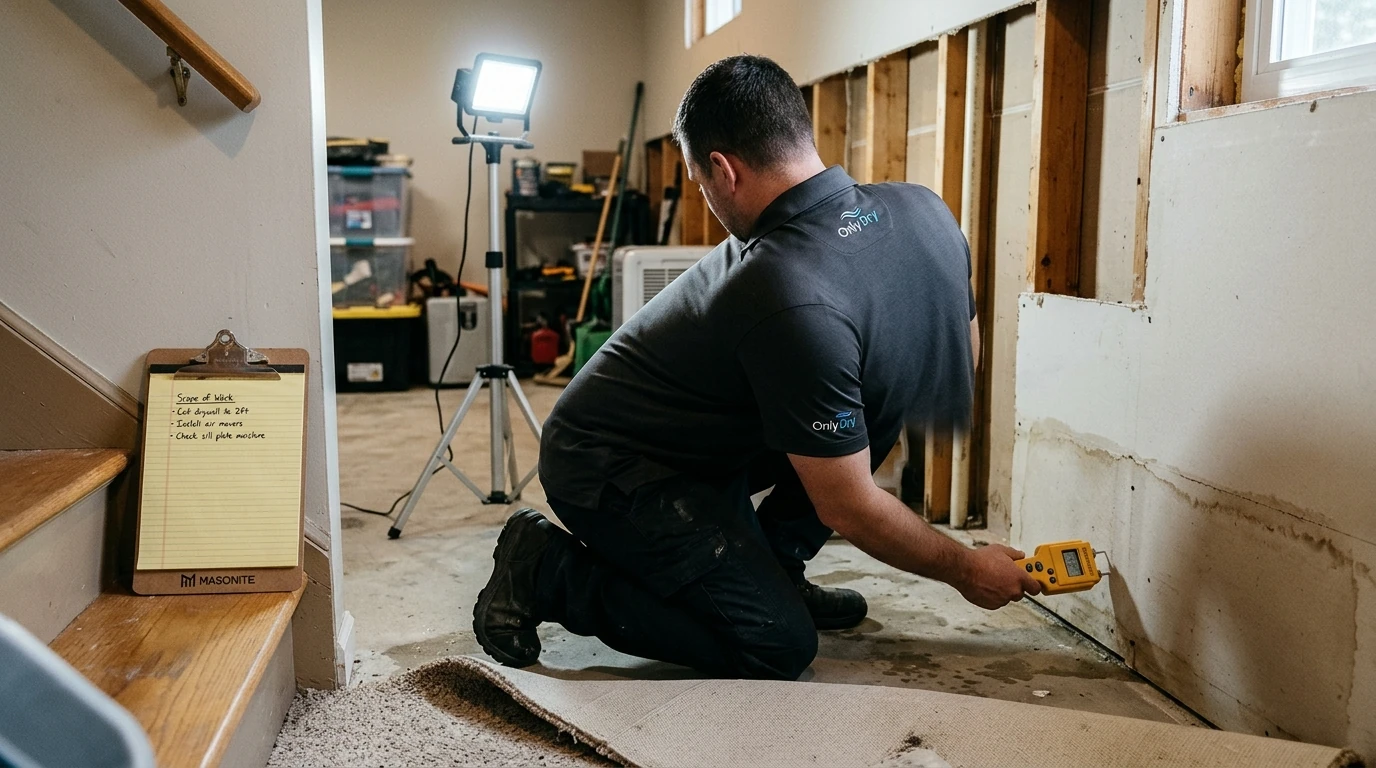
- Inspection and extraction. A technician identifies the water category, measures moisture in walls and flooring with a meter, and removes standing water with truck-mounted or portable extraction equipment.
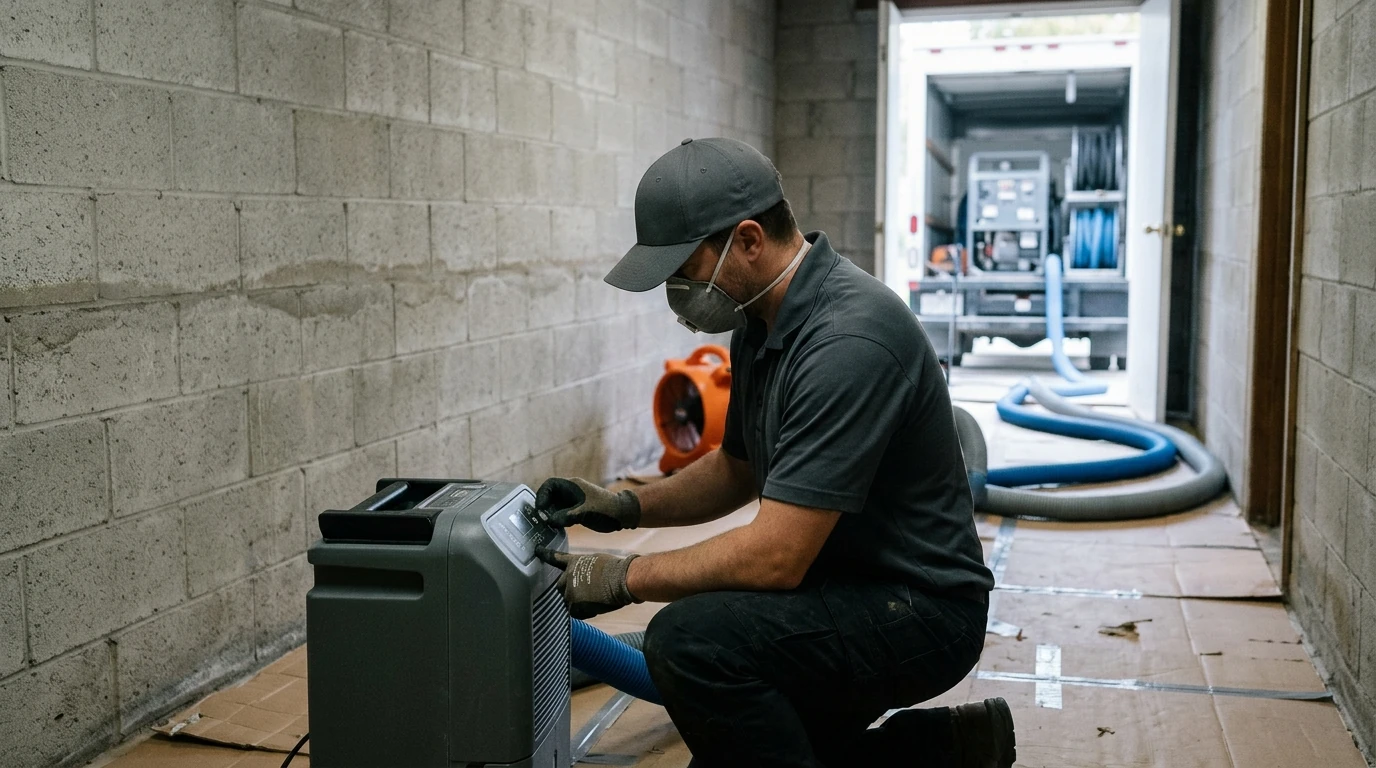
- Structural drying. Air movers and dehumidifiers run for several days while moisture readings are logged daily until materials hit a dry standard, not just a dry look.
- Cleaning and antimicrobial treatment. Category 2 and 3 losses get treated to address contamination risk before materials are closed back up.
- Repair and reconstruction. Drywall, flooring, trim, and paint get put back, which is billed separately from the drying portion of the job on most invoices.
Who Should You Call for a Water Damage Estimate in Plum?
Start with a company that will walk the property, document the damage with photos and moisture readings, and put the scope in writing before any work begins. That written scope is what protects you if the insurance adjuster questions the bill later.
If you’re in Plum or one of the surrounding communities and want a straightforward, documented assessment of what a loss will actually cost to dry and repair, scheduling a water damage estimate with Only Dry is a reasonable next step; they can walk you through the scope line by line before anything is torn out.
For the services involved, see our pages on water damage restoration and emergency water removal.
About Only Dry
Only Dry is a locally owned, 24/7 water damage restoration company serving Plum, PA and nearby communities including Fox Chapel, Oakmont, Murrysville, and Monroeville. The team works directly with homeowners and insurance adjusters to document losses and scope repairs accurately, with input from owner Michael Katofsky.
Need help now? Call Only Dry at (412) 413-9234.