TL;DR: Fire damage restoration cost in Plum, PA typically ranges from $1,500 for soot and smoke cleaning in a single room to $100,000 or more for a major structural fire affecting multiple rooms. The biggest factors are how far the fire spread, how much water the fire department used, how severe the smoke and soot residue is, and whether framing or roof structure needs rebuilding. Most homeowners insurance policies cover fire damage as a named peril, minus the deductible.
If a kitchen fire just spread past the stove and into the cabinets, or a space heater caught a bedroom wall, you’re probably standing in a house that smells like smoke, has soot on every surface, and maybe a few inches of standing water from the hoses. The fire department is gone, the adjuster hasn’t called back yet, and you need a real number before you can plan the next week. Here’s what fire damage restoration actually costs in Plum and the surrounding Allegheny County area, and what moves that number up or down.
How Much Does Fire Damage Restoration Cost in Plum, PA?
Most fire damage jobs in the Plum area fall between $1,500 for a contained, single-room soot cleanup and $100,000-plus for a fire that reached the attic, roof structure, or multiple floors. The dollar figure depends almost entirely on how far the fire traveled before it was put out, not just how it started.
Smoke and soot cleanup alone, with no structural rebuild needed, typically runs $3 to $8 per square foot industry-wide. Add structural repairs (drywall, framing, flooring, roofing) and the per-square-foot cost climbs well past that, since reconstruction labor and materials cost far more than cleaning.
| Scope of Damage | Typical Cost Range |
|---|---|
| Soot and smoke cleaning only, single room, no structural loss | $1,500 - $4,000 |
| Soot and smoke cleaning, multiple rooms | $4,000 - $10,000 |
| Moderate fire with some structural repair (fire spread from kitchen into adjacent rooms) | $12,000 - $35,000 |
| Major structural fire (framing, roof, or multiple floors affected) | $40,000 - $100,000+ |
| Contents cleaning and pack-out, per household | $1,000 - $5,000 |
| Emergency board-up and tarping | $300 - $1,500 |
Many homes in Plum and nearby communities like Oakmont and Murrysville were built mid-century, with plaster walls, older electrical systems, or lath-and-plaster ceilings. Those materials absorb smoke differently than modern drywall and often can’t be cleaned, they have to come out, which pushes a moderate fire toward the higher end of its range.
What Factors Change the Price of Fire Damage Restoration?
The price moves based on five things: how far the fire spread, what kind of smoke residue it left, how much water hit the structure, how many contents were affected, and whether the rebuild needs permits.
Soot type matters more than most homeowners expect. Dry smoke from a fast, hot fire (wood, paper) wipes off relatively easily. Wet smoke from a smoldering fire (plastics, foam, synthetic fabrics) leaves a sticky, smeared residue that penetrates porous materials and costs more to remove. Protein residue from a stovetop grease fire is nearly invisible but has an intense odor and usually requires the surface to be sealed or replaced, not just wiped.
Water from firefighting adds a second damage category on top of the fire itself. Fire hoses push hundreds of gallons into a structure in minutes. That water has to be extracted and the structure dried, following the same ANSI/IICRC S500 water-restoration standard used for any water loss, before smoke odor treatment or rebuild can start. Skipping this step risks mold starting within 24 to 48 hours on wet materials, per the EPA.
Square footage and ceiling height set the baseline labor and equipment hours. Contents affected (furniture, electronics, clothing, documents) either get cleaned off-site, which adds cost but can save items, or get written off as a total loss. Code upgrades required by the township during rebuild, like updated electrical or smoke detector placement, also add to the reconstruction phase.
Does Homeowners Insurance Cover Fire Damage in Pennsylvania?
Most standard homeowners policies cover sudden, accidental fire damage as a named peril, including the structure, attached fixtures, and personal belongings, minus your deductible. This applies in Plum and across Pennsylvania the same way it does nationally, since fire is one of the perils nearly every standard policy names.
What’s covered typically includes the structure itself, built-in fixtures, and personal property damaged by fire, smoke, or the water used to extinguish it. Many policies also include Additional Living Expenses (ALE), which pays for a hotel or short-term rental while the home is unlivable. Check your specific policy for ALE limits and time caps, since they vary by insurer. The Insurance Information Institute outlines how standard policies typically structure this coverage.
What usually is NOT automatically covered: damage from a fire you caused through negligence the insurer disputes, or losses above your dwelling coverage limit if the home is significantly underinsured. Document everything before cleanup starts, photos of every room, a written inventory of damaged contents, and keep every receipt. That documentation protects the claim and speeds up the adjuster’s approval. The U.S. Fire Administration’s guide on what to do after a home fire covers the steps to take in the first days.
What Happens During Fire Damage Restoration, and What Does Each Phase Cost?
Fire damage restoration happens in five phases: emergency mitigation, water extraction, structural and content cleaning, odor treatment, and reconstruction, and each phase is typically billed separately.
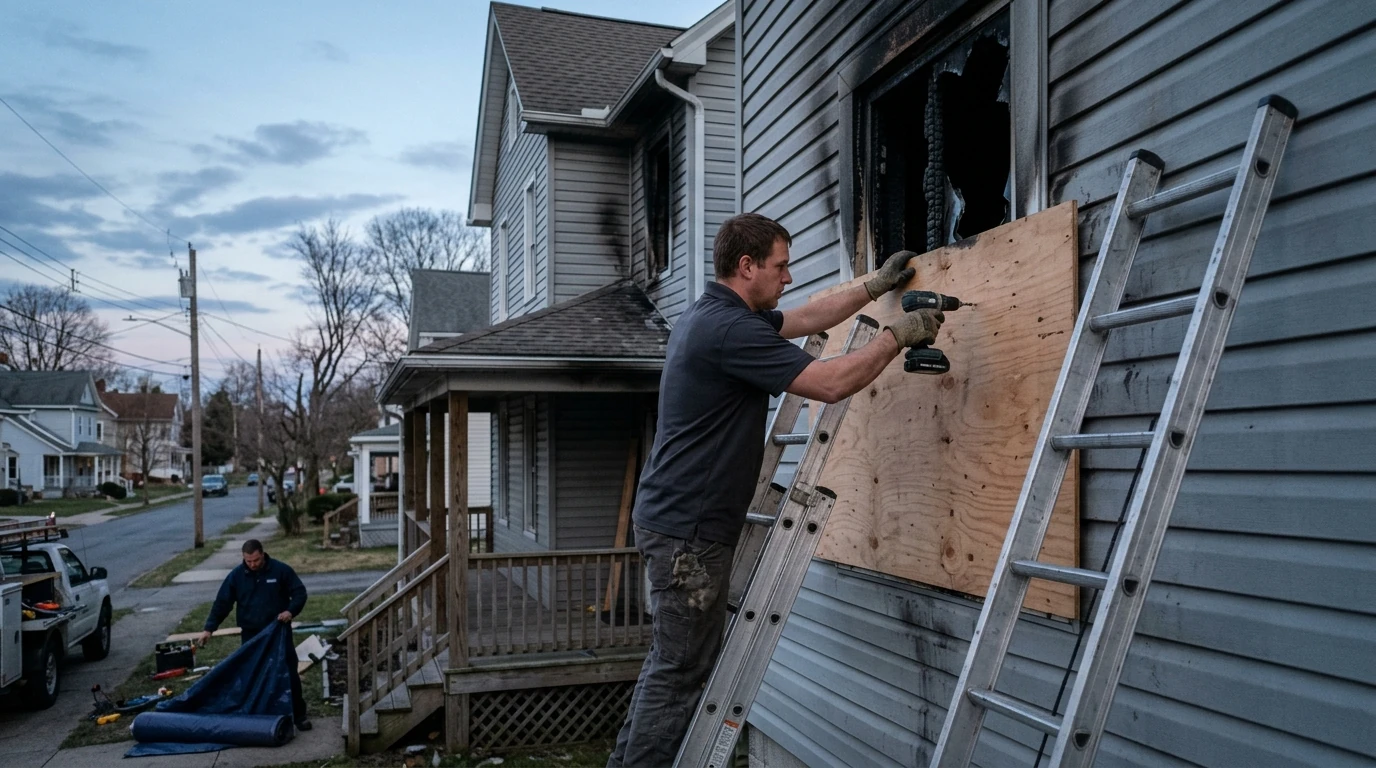
- Emergency board-up and tarping secures broken windows, a damaged roof, or exposed walls to stop weather and theft exposure. This usually runs $300 to $1,500 and happens within hours of the fire being extinguished.
- Water extraction and structural drying removes firefighting water using extraction equipment and industrial dehumidifiers, following IICRC S500 drying guidelines, before any smoke cleaning starts.
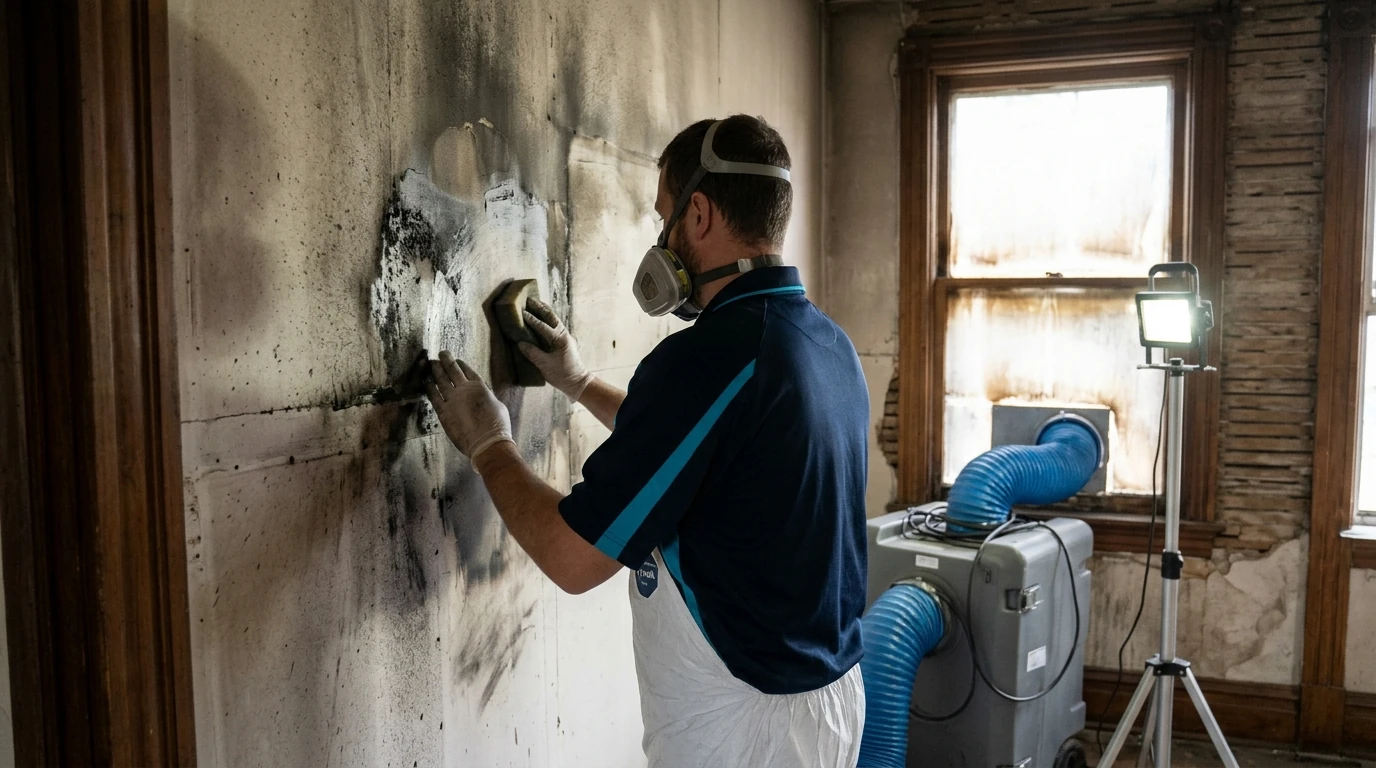
- Soot and smoke cleaning covers walls, ceilings, HVAC ducts, and any surfaces that can be restored rather than replaced. This is where soot type (dry, wet, protein) drives most of the cost variance.
- Contents cleaning or pack-out moves salvageable furniture, electronics, and textiles off-site for specialized cleaning, then returns them once the structure is cleared.
- Odor treatment (thermal fogging, ozone, or hydroxyl generators) neutralizes smoke odor trapped in porous materials that cleaning alone won’t remove.
- Reconstruction rebuilds anything that couldn’t be cleaned: drywall, flooring, cabinetry, framing, or roofing, and is usually the largest single line item on a moderate-to-major loss. Our fire damage restoration process guide walks through each of these phases in more detail.
Getting a written scope before work begins matters here more than almost any other restoration service, because the line between “clean it” and “replace it” is where most of the cost variance lives. Every fire loss is different, and a written scope protects both the homeowner and the insurance claim.
If you’re standing in a Plum home right now trying to figure out what’s salvageable, the fastest path to a real number is a documented on-site assessment, not a phone estimate. Call Only Dry at (412) 413-9234 to request a fire damage assessment; the company provides 24/7 emergency board-up and mitigation response and coordinates directly with your insurance adjuster on the documentation.
About Only Dry
This Plum, PA-based restoration company provides 24/7 emergency response for fire, smoke, and water damage across Plum, Oakmont, Murrysville, Monroeville, Fox Chapel, and the surrounding Pittsburgh-area communities. Michael Katofsky and the crew handle board-up, mitigation, structural cleaning, and reconstruction coordination, working directly with homeowners’ insurance adjusters from the first call through final repair.